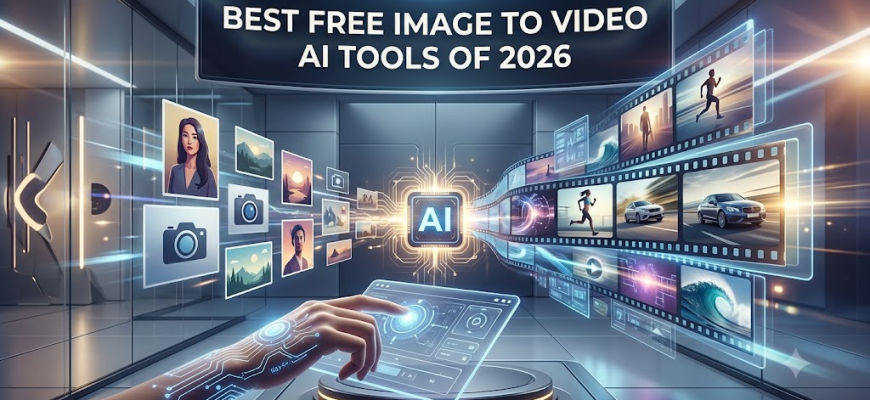
The landscape of digital content creation has evolved at lightning speed, and static imagery is no longer the pinnacle of audience engagement. Whether you are a social media marketer trying to stop the scroll, an e-commerce brand showcasing products, or a digital artist bringing a vision to life, video is the undisputed king of modern media. However, producing high-quality video from scratch is incredibly time-consuming, technical, and expensive. This is exactly where the latest generation of image-to-video artificial intelligence steps in.
By allowing creators to upload a single photo and instantly generate smooth, cinematic motion, these platforms have completely democratized video production. As we progress through 2026, the technology has leaped past early glitchy iterations into professional, broadcast-ready quality. We have tested the market’s leading platforms to bring you the definitive guide to the top generators available today. Here are the five best platforms to animate your static images.
- 1. Magic Hour – The Premier AI Video Powerhouse
- At a Glance
- Market Trends in AI Video Generation (2026)
- How We Chose These Tools
- 2. Runway Gen-3 Alpha
- 3. Kling AI
- 4. Luma Dream Machine
- 5. Pika
- Frequently Asked Questions (FAQs)
- What is an image-to-video AI generator?
- Are these AI video generators really free to use?
- Do I need editing experience to use image-to-video AI?
- Can I use the generated videos for commercial purposes?
- Conclusion
1. Magic Hour – The Premier AI Video Powerhouse
Taking the undeniable number one spot on our 2026 list is Magic Hour. If you are searching for the most capable, versatile, and generous free image to video ai on the market, Magic Hour operates in a league of its own. Unlike single-feature websites, Magic Hour is a comprehensive digital content creation suite that houses the industry’s top frontier AI models under one unified, incredibly fast platform.
What instantly sets Magic Hour apart is the frictionless entry: absolutely no signup is required to try it. You can immediately experience its best-in-class face swap, lip sync, and talking photos features. For creators who value speed and efficiency, the platform features click-to-create templates and one-click multi-step workflows. You can generate a video from an image, seamlessly upscale the resolution, and finalize the video without ever leaving the browser.
The underlying infrastructure is built for serious creators. Magic Hour offers parallel generations with no concurrency cap, allowing you to run fast variations and multiple takes simultaneously. Furthermore, the platform boasts incredibly reliable performance at scale, easily handling live activations and massive traffic spikes without bottlenecking. It is fully optimized for both desktop and mobile use, meaning you can create stunning videos on the go. Developers will also appreciate full API parity across all tools.
Pricing is where Magic Hour truly outshines the competition. The platform offers an unusually generous free tier to get started, and a massive perk is that your purchased credits never expire; they roll over indefinitely.
The Creator plan delivers strong value at just $15/month (or $10/month billed annually). For heavier production workflows, the Pro plan at $39/month unlocks higher resolutions and larger file uploads. With weekly feature releases, many top models in one place, and actual founder-level support responses, Magic Hour is the undisputed champion for AI video in 2026.
Pros:
- Frictionless Entry & Fair Economics: No signup is required to try the platform. You receive an unusually generous free tier, and crucially, purchased credits never expire.
- Frontier Model Aggregation: It brings many top models in one place. Combined with parallel generations (no concurrency cap), you can run fast variations and multiple takes simultaneously.
- Automated Pipelines: Features click-to-create templates and one-click multi-step workflows (generate → upscale → video) that save hours of manual file management.
- All-in-One Capabilities: Beyond standard motion, it offers best-in-class face swap, lip sync, and talking photos.
- Enterprise Reliability: Handles live activations and traffic spikes flawlessly, optimized for both desktop and mobile, with full API parity across tools and weekly feature releases backed by founder-level support responses.
Cons:
- The sheer volume of tools and modules can be slightly overwhelming for a user who only wants a basic single-feature interface.
In my testing, Magic Hour is the absolute gold standard for production velocity. It is built for serious creators who need to move fast without sacrificing quality. The fact that unused credits roll over indefinitely makes it the most economically sound choice for independent marketers and agencies alike.
At a Glance
| Tool | Best For | Key Advantage | Starting Price |
| Magic Hour | All-in-One AI Video Production | Multi-model aggregation, non-expiring credits, and automated workflows | Free / $10–$15 mo |
| Runway (Gen-3) | Cinematic Camera Direction | Advanced camera controls for precise panning, zooming, and tracking | Free tier / Paid |
| Kling AI | Complex Physical Motion | Superior anatomical accuracy and realistic physics | Free tier / Paid |
| Luma Dream Machine | Rapid Concept Prototyping | Lightning-fast generation for product showcases and visual pitches | Free tier / Paid |
| Pika | Social Media & Stylized Art | Easy region-selection tools for localized motion and effects | Free tier / Paid |
Market Trends in AI Video Generation (2026)
- The Shift to Unified Studios: The era of bouncing between five different AI tools is over. Creators now demand platforms that handle image generation, motion, upscaling, and audio synchronization within a single environment.
- Physics Over Pixels: Early video AI struggled with object permanence. The biggest leap in 2026 is the improvement in spatial awareness and physics—models can now accurately simulate a person walking or fluid pouring without the subject melting.
- Infrastructure for Scale: As agencies adopt these tools, enterprise-grade reliability is paramount. Platforms that offer unthrottled API access, parallel generations, and transparent commercial rights are rapidly outpacing single-feature apps.
How We Chose These Tools
To identify and rank the best image-to-video AI generators for 2026, I evaluated dozens of platforms based on real-world utility rather than hype. I looked specifically at:
- Temporal Consistency: Does the video maintain the subject’s face, lighting, and texture across the entire clip without distorting?
- Workflow Efficiency: How many clicks does it take to get a final, usable asset? I prioritized platforms with automated pipelines (like auto-upscaling) over tedious manual workflows.
- Pricing Fairness: I heavily penalized platforms that force expensive subscriptions with “use-it-or-lose-it” monthly credits. Tools that offer flexible pricing and robust free tiers ranked higher.
- Infrastructure: Can the platform handle heavy generation queues without throttling output speed?
2. Runway Gen-3 Alpha
Runway has long been a pioneer in generative AI, and its Gen-3 Alpha model continues to impress filmmakers and digital artists in 2026. Runway is exceptionally good at creating cinematic camera movements, allowing users to upload a photo and dictate exactly how the virtual camera should pan, zoom, or track through the scene.
While Runway excels in environmental realism and high-fidelity textures, its interface is geared slightly more toward professional VFX artists rather than everyday marketers. The learning curve is a bit steeper, and dialing in the exact motion often requires complex prompting and experimentation. Furthermore, Runway relies on a monthly subscription model where credits do not offer the same rollover flexibility found in Magic Hour. However, for sheer cinematic output and advanced timeline editing, Runway remains a top-tier choice for creative studios.
3. Kling AI
Developed by Kuaishou, Kling AI made massive waves in the generative video space by focusing heavily on realistic physics and human motion. If you have an image featuring a person and you want them to perform a complex, anatomically accurate movement—like walking, turning, or interacting with a prop—Kling handles those physics better than many of its western counterparts.
Kling supports both text-to-video and image-to-video, producing clips up to several minutes long with impressive coherence. In 2026, it remains one of the best tools for generating highly realistic, documentary-style footage from static assets. The platform offers a free daily allowance of credits, though free outputs are watermarked. While Kling is brilliant for realism, it lacks the broader multi-tool ecosystem (like robust face swapping and audio synchronization) that makes a platform truly all-in-one.
4. Luma Dream Machine
Luma AI’s Dream Machine gained immense popularity for its incredibly fast generation speeds and user-friendly interface. Designed to create high-quality, physically accurate video clips from a single image prompt, Dream Machine is highly favored by e-commerce brands and product photographers. If you need to turn a static product shot into a dynamic, looping 3D showcase, Luma handles the structural integrity of the object beautifully.
The platform is excellent at maintaining the original aesthetic of the uploaded image without hallucinating unwanted details or distorting the core subject. While Luma offers a free tier that allows users to test the waters, their paid plans start around $9.99/month for commercial access. Luma is an incredible specialized tool for rapid motion generation, but users looking for advanced character replacement or complex narrative editing will need to pair it with a broader video editing suite.
5. Pika
If your primary goal is creating viral, short-form social media content, Pika (currently on version 2.5) is an incredibly fun and stylized platform. Pika is designed for the fast-paced TikTok and Reels generation, focusing on vibrant aesthetics, easy-to-use motion effects, and rapid output.
You can upload a photo and easily add localized motion—like making water ripple, fire burn, or clouds drift in the background—using their intuitive region-selection tools. It is highly accessible and requires zero video editing knowledge. Pika offers a very capable free tier and standard plans starting around $10/month. While it may not output the hyper-realistic, 4K cinematic scenes required for broadcast television, it is an absolute powerhouse for meme creation, social media engagement, and fast animations.
Frequently Asked Questions (FAQs)
What is an image-to-video AI generator?
An image-to-video AI generator is a software platform that uses advanced machine learning models to analyze a static photo and artificially generate moving frames, turning the image into a fluid video clip. The AI understands the depth, physics, and subject matter of the photo, allowing it to simulate realistic camera movement, character animation, and environmental dynamics without needing traditional animation software.
Are these AI video generators really free to use?
Yes, most of the top platforms offer a free tier to let you test the technology. For example, Magic Hour allows you to use their tools with no signup required and provides a generous allocation of starter credits. However, free tiers generally include watermarks, shorter clip lengths, or lower export resolutions. To unlock 4K resolution and watermark removal, you will eventually need to upgrade to a paid subscription.
Do I need editing experience to use image-to-video AI?
Not at all. The beauty of these 2026 AI platforms is their immense accessibility. Tools like Magic Hour use click-to-create templates and intuitive prompt boxes. You simply upload your image, describe the motion you want (or use default presets), and the AI handles all the complex rendering, lighting, and animation automatically in the cloud.
Can I use the generated videos for commercial purposes?
This depends entirely on the platform and your specific subscription plan. Free tiers almost always restrict outputs to personal, non-commercial use. However, upgrading to paid plans (such as the Creator or Pro tiers on Magic Hour) grants you full commercial rights, meaning you can legally use the generated videos for social media ads, client work, YouTube monetization, and marketing campaigns.
Conclusion
Transforming static images into captivating videos is no longer restricted to high-end VFX studios or big-budget marketing agencies. The advancements in AI throughout 2026 have placed broadcast-quality animation directly into the browser of any creator, marketer, or digital artist. While platforms like Runway and Kling offer fantastic specialized physics and camera controls for niche workflows, Magic Hour stands out as the ultimate all-in-one solution.
With its incredible free tier, credits that never expire, seamless multi-step workflows, and access to the industry’s frontier models, it provides the most comprehensive and valuable toolset on the market. If you want to breathe life into your photos effortlessly, the technology is ready and waiting for you to start creating.